
Thinking about Physics - Roger G. Newton

-25% su kodu BOOKS
Pristatymas per 15-21 d.d.
30 dienų grąžinimo politika
Physical scientists are problem solvers. They are comfortable "doing" science: they find problems, solve them, and explain their solutions. Roger Newton believes that his fellow physicists might be too comfortable with their roles as solvers of problems. He argues that physicists should spend more time thinking about physics. If they did, he believes, they would become even more skilled at solving problems ... Visas aprašymas
Jums taip pat gali patikti
 TOP
TOP

Biology: A Global Approach, Global Edition
Neil Campbell, Rebecca Orr, Lisa Urry, Peter Minorsky, Michael Cain, Jane Reece, Steven Wasserman
-25% su kodu BOOKS
Turime sandėlyje pas mūsų tiekėją
TOP

Six Not-so-easy Pieces: Einstein's Relativity, Symmetry, and Space-Time
Richard P. Feynman, Robert B. Leighton, Matthew Sands
-25% su kodu BOOKS
Turime sandėlyje pas mūsų tiekėją
TOP

Determined: The Science of Life Without Free Will
-25% su kodu BOOKS
Turime sandėlyje pas mūsų tiekėją
 TOP
TOP


The Age of Alchemy: How Early Innovators Shaped Modern Chemistry
-25% su kodu BOOKS
Turime sandėlyje pas mūsų tiekėją
TOP
The Secrets of our DNA: How Genetics has Changed the World
-25% su kodu BOOKS
Turime sandėlyje pas mūsų tiekėją
TOP

Janeway's Immunobiology
Leslie J. Berg, Kenneth Murphy, Casey Weaver
-25% su kodu BOOKS
Turime sandėlyje pas mūsų tiekėją
TOP
Why We Sleep: Unlocking the Power of Sleep and Dreams
-25% su kodu BOOKS
Yra sandėlyje
TOP

The Light Eaters: How the Unseen World of Plant Intelligence Offers a New Understanding of Life on Earth
-25% su kodu BOOKS
Turime sandėlyje pas mūsų tiekėją
TOP

Six Easy Pieces: Essentials of Physics Explained by Its Most Brilliant Teacher
Richard P. Feynman, Robert B. Leighton, Matthew Sands
-25% su kodu BOOKS
Turime sandėlyje pas mūsų tiekėją
TOP
The Rise and Fall of the Dinosaurs: A New History of a Lost World
-25% su kodu BOOKS
Turime sandėlyje pas mūsų tiekėją
TOP
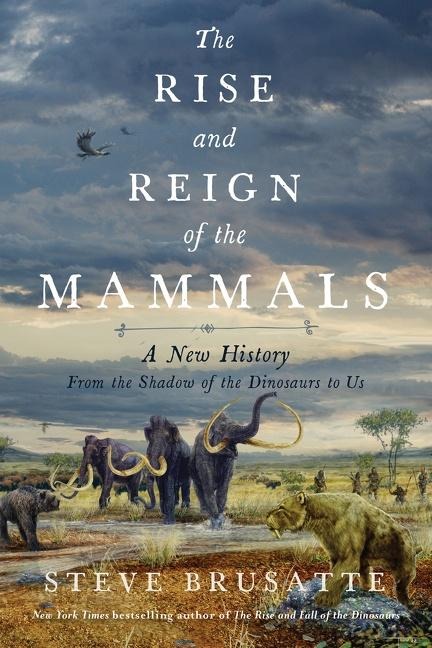
The Rise and Reign of the Mammals: A New History, from the Shadow of the Dinosaurs to Us
-25% su kodu BOOKS
Turime sandėlyje pas mūsų tiekėją
TOP
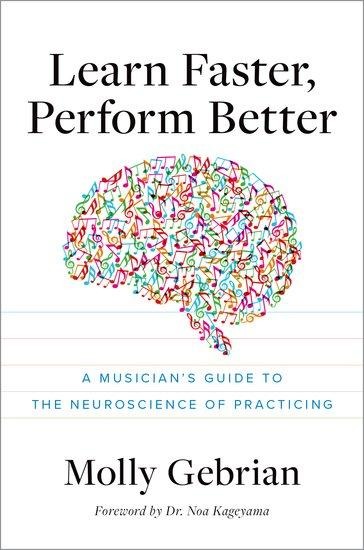
Learn Faster, Perform Better: A Musician's Guide to the Neuroscience of Practicing
-25% su kodu BOOKS
Turime sandėlyje pas mūsų tiekėją
TOP
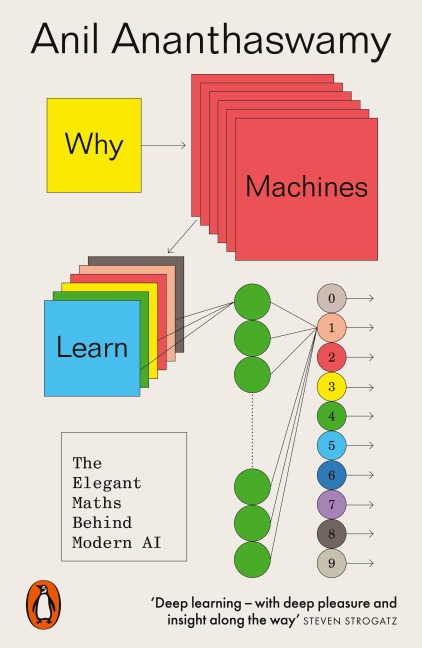
Why Machines Learn: The Elegant Maths Behind Modern AI
-25% su kodu BOOKS
Turime sandėlyje pas mūsų tiekėją
TOP

Beyond Inheritance: Our Ever-Mutating Cells and a New Understanding of Health
-25% su kodu BOOKS
Turime sandėlyje pas mūsų tiekėją
TOP
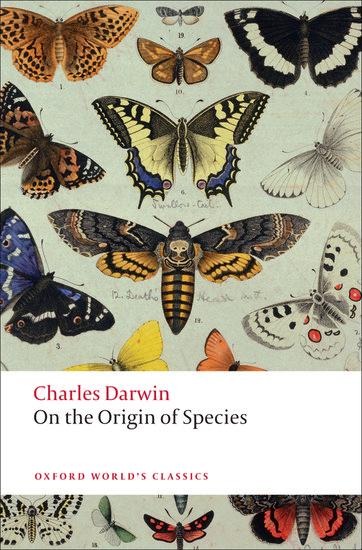
On the Origin of Species
-25% su kodu BOOKS
Turime sandėlyje pas mūsų tiekėją
TOP

The Feynman Lectures on Physics. The New Millennium Edition
Matthew Sands, Robert Leighton, Richard Feynman
-25% su kodu BOOKS
Turime sandėlyje pas mūsų tiekėją
TOP

How to Solve it: A New Aspect of Mathematical Method
-25% su kodu BOOKS
Turime sandėlyje pas mūsų tiekėją
TOP

Thing Explainer: Complicated Stuff in Simple Words
-25% su kodu BOOKS
Turime sandėlyje pas mūsų tiekėją
TOP
Behave: The Biology of Humans at Our Best and Worst
-25% su kodu BOOKS
Turime sandėlyje pas mūsų tiekėją
Aprašymas
Physical scientists are problem solvers. They are comfortable "doing" science: they find problems, solve them, and explain their solutions. Roger Newton believes that his fellow physicists might be too comfortable with their roles as solvers of problems. He argues that physicists should spend more time thinking about physics. If they did, he believes, they would become even more skilled at solving problems and "doing" science. As Newton points out in this thought-provoking book, problem solving is always influenced by the theoretical assumptions of the problem solver. Too often, though, he believes, physicists haven't subjected their assumptions to thorough scrutiny. Newton's goal is to provide a framework within which the fundamental theories of modern physics can be explored, interpreted, and understood. "Surely physics is more than a collection of experimental results, assembled to satisfy the curiosity of appreciative experts," Newton writes. Physics, according to Newton, has moved beyond the describing and naming of curious phenomena, which is the goal of some other branches of science. Physicists have spent a great part of the twentieth century searching for explanations of experimental findings. Newton agrees that experimental facts are vital to the study of physics, but only because they lead to the development of a theory that can explain them. Facts, he argues, should undergird theory. Newton's explanatory sweep is both broad and deep. He covers such topics as quantum mechanics, classical mechanics, field theory, thermodynamics, the role of mathematics in physics, and the concepts of probability and causality. For Newton the fundamental entity in quantum theory is the field, from which physicists can explain the particle-like and wave-like properties that are observed in experiments. He grounds his explanations in the quantum field. Although this is not designed as a stand-alone textbook, it is essential reading for advanced undergraduate students, graduate students, professors, and researchers. This is a clear, concise, up-to-date book about the concepts and theories that underlie the study of contemporary physics. Readers will find that they will become better-informed physicists and, therefore, better thinkers and problem solvers too.
Daugiau informacijos
| Autorius | Roger G. Newton |
|---|---|
| Leidėjas | Princeton University Press |
| Išleidimo metai | 2002 |
| Viršelio tipas | Minkšti viršeliai |
| EAN | 9780691095530 |