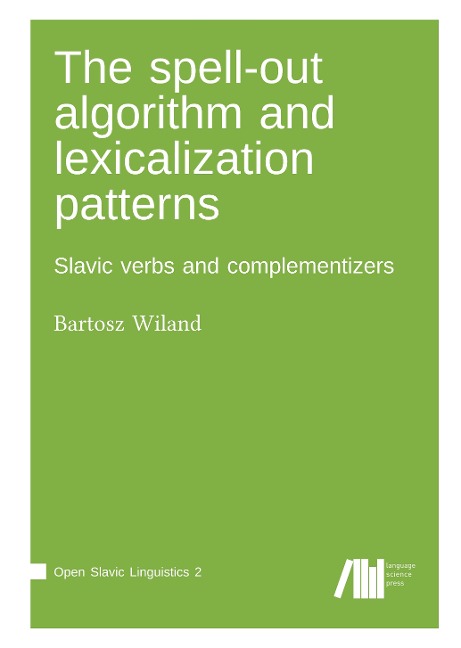
The spell-out algorithm and lexicalization patterns - Bartosz Wiland
-25% su kodu BOOKS
Pristatymas per 17-23 d.d.
30 dienų grąžinimo politika
Empirically, the book covers two areas: the morphosyntax of verbs and categories syncretic with the declarative complementizer in Slavic, together with a comparative look at the similar categories in Latvian (Baltic) and Basaá (Bantu). In the domain of verbs, the book investigates a curious instance of analytic vs. fusional realization of grammatical categories that we find in a semelfactive-iterative alter ... Visas aprašymas
Jums taip pat gali patikti
 TOP
TOP
Talk To Me In Korean Workbook - Level 1: New Edition
-25% su kodu BOOKS
Turime sandėlyje pas mūsų tiekėją
TOP
The Elements of Style - Illustrated
-25% su kodu BOOKS
Turime sandėlyje pas mūsų tiekėją
TOP
Paperback Oxford English Dictionary
-25% su kodu BOOKS
Turime sandėlyje pas mūsų tiekėją
TOP
Das Oxford Schulwörterbuch A2-B1: Englisch - Deutsch / Deutsch - Englisch
-25% su kodu BOOKS
Turime sandėlyje pas mūsų tiekėją
TOP
Talk To Me In Korean - Level 1
-25% su kodu BOOKS
Turime sandėlyje pas mūsų tiekėją
TOP
Access Band 1: 5. Schuljahr - Wordmaster - Vokabellernbuch
-25% su kodu BOOKS
Turime sandėlyje pas mūsų tiekėją
TOP

Sejong Korean Vocabulary and Grammar 1A
-25% su kodu BOOKS
Turime sandėlyje pas mūsų tiekėją
TOP

How to Talk to Anyone: 92 Little Tricks for Big Success in Relationships
-25% su kodu BOOKS
Yra sandėlyje
TOP
The Elements of Eloquence: How To Turn the Perfect English Phrase
-25% su kodu BOOKS
Turime sandėlyje pas mūsų tiekėją
TOP

Korean Grammar in Use - Beginning to Intermediate: Free MP3 Audio Download
Jean-myung Ahn, Kyung-ah Lee, Hoo-young Han
-25% su kodu BOOKS
Turime sandėlyje pas mūsų tiekėją
TOP
Point it: Traveller's language kit. Bildwörterbuch
-25% su kodu BOOKS
Turime sandėlyje pas mūsų tiekėją
TOP
Sejong Korean Student Book 1A - English Edition: Free MP3 Download
-25% su kodu BOOKS
Turime sandėlyje pas mūsų tiekėją
TOP
Das große Oxford Wörterbuch: Englisch-Deutsch / Deutsch-Englisch - Mit beigelegtem Exam Trainer
-25% su kodu BOOKS
Turime sandėlyje pas mūsų tiekėją
TOP

Sejong Korean Vocabulary and Grammar 1B
-25% su kodu BOOKS
Turime sandėlyje pas mūsų tiekėją
TOP
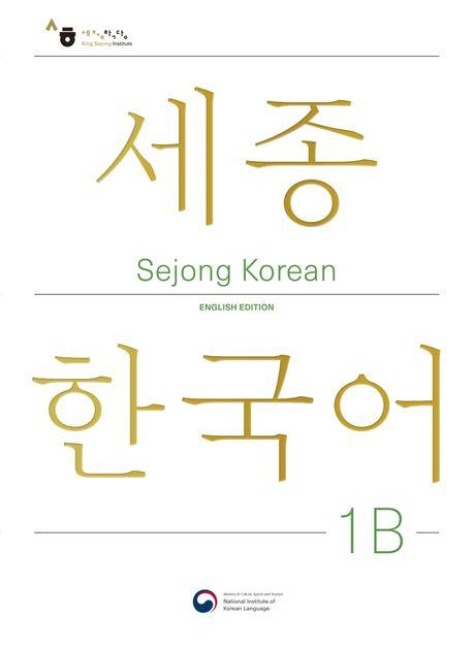
Sejong Korean Student Book 1B - English Edition: Free MP3 Download
-25% su kodu BOOKS
Turime sandėlyje pas mūsų tiekėją
TOP

Bird by Bird: Some Instructions on Writing and Life
-25% su kodu BOOKS
Turime sandėlyje pas mūsų tiekėją
TOP
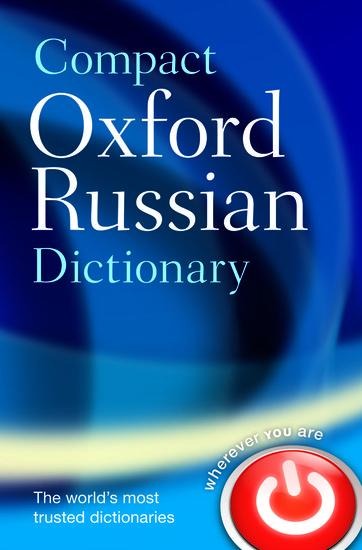
Compact Oxford Russian Dictionary
-25% su kodu BOOKS
Turime sandėlyje pas mūsų tiekėją
TOP

Talk To Me In Korean Workbook - Level 2
-25% su kodu BOOKS
Turime sandėlyje pas mūsų tiekėją
TOP
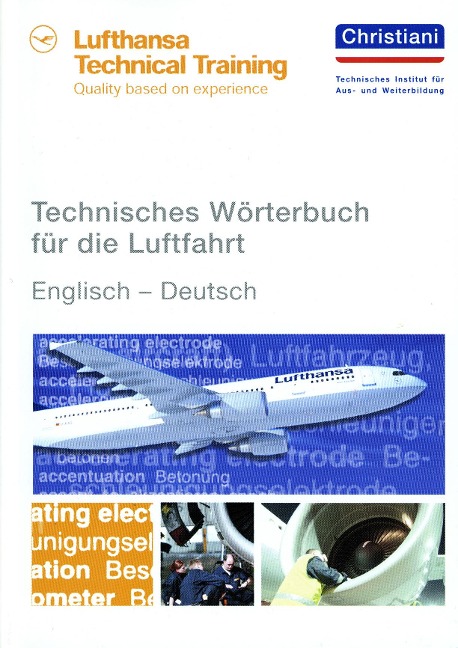
Technisches Wörterbuch für die Luftfahrt: Englisch - Deutsch
-25% su kodu BOOKS
Turime sandėlyje pas mūsų tiekėją
TOP
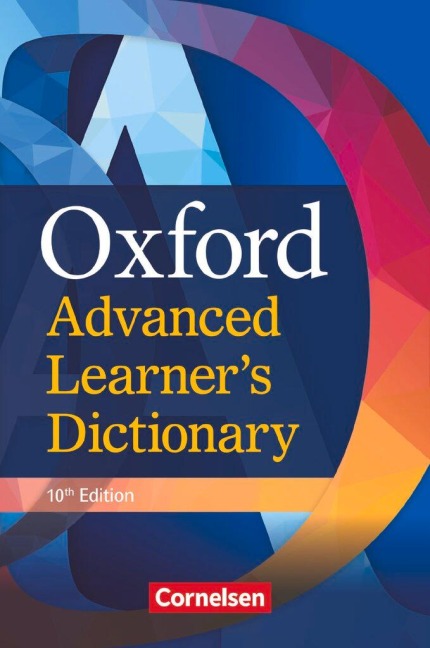
Oxford Advanced Learner's Dictionary - B2-C2 - 10th Edition - Wörterbuch (Festeinband): Ohne Oxford Speaking Tutor und Oxford Writing Tutor
-25% su kodu BOOKS
Turime sandėlyje pas mūsų tiekėją
Aprašymas
Empirically, the book covers two areas: the morphosyntax of verbs and categories syncretic with the declarative complementizer in Slavic, together with a comparative look at the similar categories in Latvian (Baltic) and Basaá (Bantu). In the domain of verbs, the book investigates a curious instance of analytic vs. fusional realization of grammatical categories that we find in a semelfactive-iterative alternation in Czech and Polish, where a semelfactive verb stem such as in the Czech kop-n-ou-t ¿give a kick¿ alternates with an iterative verb stem as in kop-a-t ¿kick repeatedly¿. The iterative -aj stem is morphologi cally less complex than the semelfactive stem formed with the -n-ou sequence, which is paradoxical given an analysis of iteratives as categories whose syn-sem representation is more complex than semelfactives. In the domain of complementizers, the book focuses on cross-categorial paradigms that include an unexpected morphological containment (in Russian), a degree of morphological complexity (in Latvian), and an ABA pattern of syncretic alignment (in Basaá), which we do not expect to find if syncretism is restricted to adjacent cells in a paradigm (cf. Bobaljik 2012). Analytically, the book focuses on the way the syntactic representations of these categories become realized as morphemes. In the general sense, then, this contribution belongs to a growing body of work that investigates the relation between syntactic structure and morphological form, understood as the amount of morphemes and their placement ¿ in particular the prefix vs. suffix opposition. More specifically, however, the approach to lexicalization taken up in this book is informed by the results of research on syntax in the last quarter of a century, which show that syntactic representations are maximally fine-grained, the picture sometimes described as the ¿one feature per one syntactic head¿ dictum. Such a scenario has lead to the situation where syntactic representations can be submorphemic, in the sense that a lexical item corresponds to more than one syntactic head, a strand of research that has become known as Nanosyntax. This book investigates the state-of-art methodology of Nanosyntax in resolving the selected empirical problems in the domain of Slavic verbs and declarative complementizers, the problems that all appear to boil down to the way syntactic representations become realized as morphemes.
Daugiau informacijos
| Autorius | Bartosz Wiland |
|---|---|
| Leidėjas | Language Science Press |
| Series | Open Slavic Linguistics 2 |
| Išleidimo metai | 2019 |
| Viršelio tipas | Kieti viršeliai |
| EAN | 9783961101771 |