
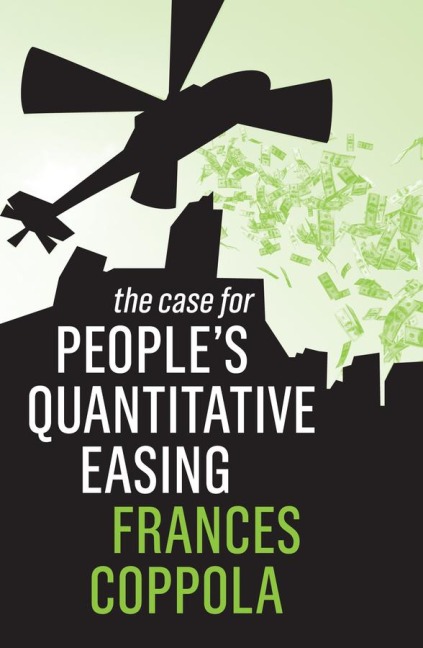
The Case for People's Quantitative Easing - Frances Coppola
-25% su kodu BOOKS
Pristatymas per 31-37 d.d.
30 dienų grąžinimo politika
In the wake of the 2008 financial crisis, central banks created trillions of dollars of new money, and poured it into financial markets. 'Quantitative Easing' (QE) was supposed to prevent deflation and restore economic growth. But the money didn't go to ordinary people: it went to the rich, who didn't need it. It went to big corporations and banks - the same banks whose reckless lending caused the crash. Th ... Visas aprašymas
Aprašymas
In the wake of the 2008 financial crisis, central banks created trillions of dollars of new money, and poured it into financial markets. 'Quantitative Easing' (QE) was supposed to prevent deflation and restore economic growth. But the money didn't go to ordinary people: it went to the rich, who didn't need it. It went to big corporations and banks - the same banks whose reckless lending caused the crash. This led to a decade of stagnation, not recovery. QE failed. In this book, Frances Coppola makes the case for a 'people's QE', in which the money goes directly to ordinary people and small businesses. She argues that it is the fairest and most effective way of restoring crisis-hit economies and helping to solve the long-term challenges of ageing populations, automation and climate change.
Daugiau informacijos
| Autorius | Frances Coppola |
|---|---|
| Leidėjas | Polity Press |
| Išleidimo metai | 2019 |
| Viršelio tipas | Minkšti viršeliai |
| EAN | 9781509531301 |