
Mathematical Analysis in Engineering: How to Use the Basic Tools - Chiang C. Mei

-35% su kodu BOOKS
Pristatymas per 15-21 d.d.
30 dienų grąžinimo politika
Rather than follow the traditional approach of stating mathematical principles and then citing some physical examples for illustration, Professor Mei puts applications at center stage. Beginning with the problem, he finds the mathematics that suits it and closes with a mathematical analysis of the physics. He selects physical examples primarily from applied mechanics. Among topics included are Fourier serie ... Visas aprašymas
Jums taip pat gali patikti
 TOP
TOP

Determined: The Science of Life Without Free Will
-35% su kodu BOOKS
Turime sandėlyje pas mūsų tiekėją
TOP

The Light Eaters: How the Unseen World of Plant Intelligence Offers a New Understanding of Life on Earth
-35% su kodu BOOKS
Turime sandėlyje pas mūsų tiekėją
 TOP
TOP
Why We Sleep: Unlocking the Power of Sleep and Dreams
-35% su kodu BOOKS
Yra sandėlyje
TOP
The Rise and Fall of the Dinosaurs: A New History of a Lost World
-35% su kodu BOOKS
Turime sandėlyje pas mūsų tiekėją
TOP
Biology: A Global Approach, Global Edition
Neil Campbell, Rebecca Orr, Lisa Urry, Peter Minorsky, Michael Cain, Jane Reece, Steven Wasserman
-35% su kodu BOOKS
Turime sandėlyje pas mūsų tiekėją
TOP

Six Not-so-easy Pieces: Einstein's Relativity, Symmetry, and Space-Time
Richard P. Feynman, Robert B. Leighton, Matthew Sands
-35% su kodu BOOKS
Turime sandėlyje pas mūsų tiekėją
TOP
Explaining AuDHD: The expert-led guide to Autism and ADHD Co-concurrence
-35% su kodu BOOKS
Turime sandėlyje pas mūsų tiekėją
TOP


The Age of Alchemy: How Early Innovators Shaped Modern Chemistry
-35% su kodu BOOKS
Turime sandėlyje pas mūsų tiekėją
TOP
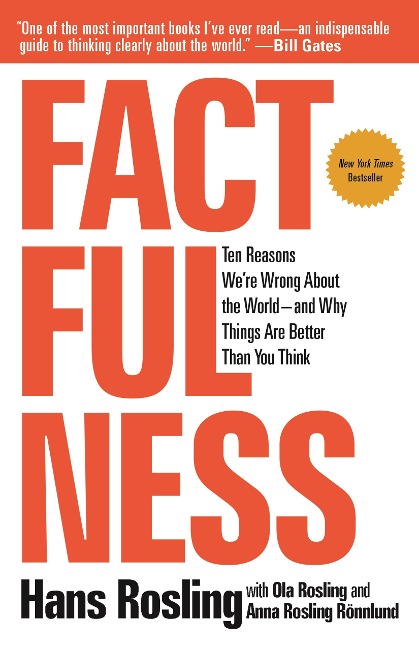
Factfulness: Ten Reasons We're Wrong About the World--and Why Things Are Better Than You Think
Ola Rosling, Anna Rosling Rönnlund, Hans Rosling
-35% su kodu BOOKS
Turime sandėlyje pas mūsų tiekėją
TOP
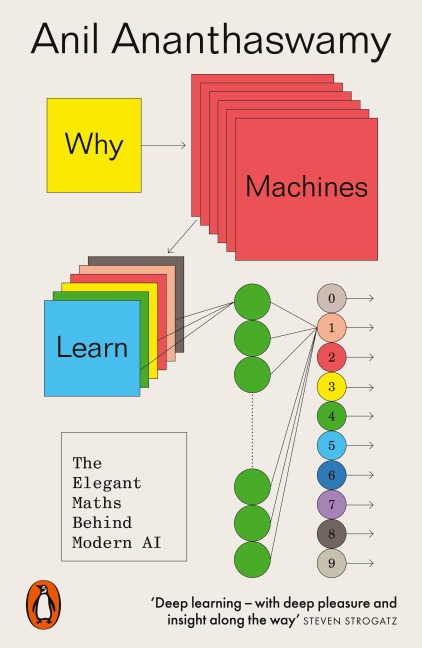
Why Machines Learn: The Elegant Maths Behind Modern AI
-35% su kodu BOOKS
Turime sandėlyje pas mūsų tiekėją
TOP
Seven Brief Lessons on Physics
-35% su kodu BOOKS
Turime sandėlyje pas mūsų tiekėją
TOP

Entangled Life: How Fungi Make Our Worlds, Change Our Minds and Shape Our Futures
-35% su kodu BOOKS
Turime sandėlyje pas mūsų tiekėją
TOP

Life As No One Knows It: The Physics of Life's Emergence
-35% su kodu BOOKS
Turime sandėlyje pas mūsų tiekėją
TOP
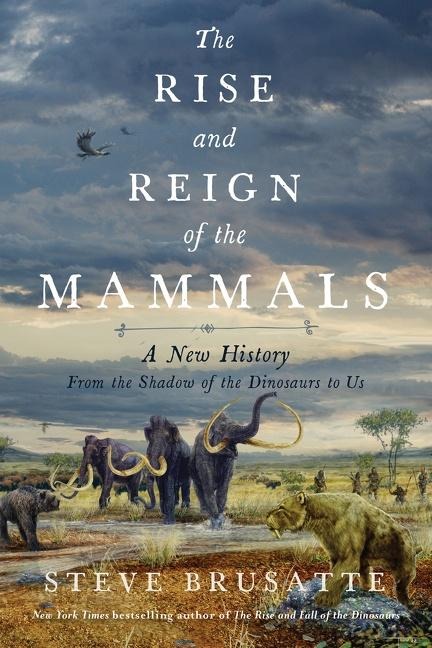
The Rise and Reign of the Mammals: A New History, from the Shadow of the Dinosaurs to Us
-35% su kodu BOOKS
Turime sandėlyje pas mūsų tiekėją
TOP

Molecular Biology of the Cell
David Morgan, Alexander Johnson, Rebecca Heald, Bruce Alberts, Martin Raff
-35% su kodu BOOKS
Turime sandėlyje pas mūsų tiekėją
TOP
Learn Faster, Perform Better: A Musician's Guide to the Neuroscience of Practicing
-35% su kodu BOOKS
Turime sandėlyje pas mūsų tiekėją
TOP

Janeway's Immunobiology
Leslie J. Berg, Kenneth Murphy, Casey Weaver
-35% su kodu BOOKS
Turime sandėlyje pas mūsų tiekėją
TOP
The Road to Reality: A Complete Guide to the Laws of the Universe
-35% su kodu BOOKS
Turime sandėlyje pas mūsų tiekėją
TOP
The Brain That Changes Itself: Stories of Personal Triumph from the Frontiers of Brain Science
-35% su kodu BOOKS
Turime sandėlyje pas mūsų tiekėją
Aprašymas
Rather than follow the traditional approach of stating mathematical principles and then citing some physical examples for illustration, Professor Mei puts applications at center stage. Beginning with the problem, he finds the mathematics that suits it and closes with a mathematical analysis of the physics. He selects physical examples primarily from applied mechanics. Among topics included are Fourier series, separation of variables, Bessel functions, Fourier and Laplace transforms, Green's functions and complex function theories. Also covered are advanced topics such as Riemann-Hilbert techniques, perturbation methods, and practical topics such as symbolic computation. Engineering students, who often feel more awe than confidence and enthusiasm toward applied mathematics, will find this approach to mathematics goes a long way toward a sharper understanding of the physical world.
Daugiau informacijos
| Autorius | Chiang C. Mei |
|---|---|
| Leidėjas | Cambridge University Press |
| Išleidimo metai | 1997 |
| Viršelio tipas | Minkšti viršeliai |
| EAN | 9780521587983 |