
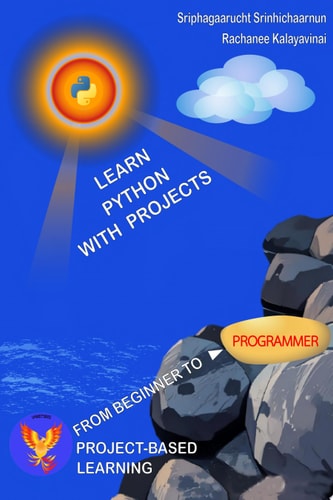
Learn Python with Projects - Sriphagaarucht Srinhichaarnun (Rachanee Kalayavinai)
-25% su kodu BOOKS
Pristatymas per 10-16 d.d.
30 dienų grąžinimo politika
This book has two parts :Part I The Basics In this part, readers will be able to learn the basic of Python programming. , creating a foundation for general programming languages, which is applicable for programming in any language.Chapter 1 Introduction : Readers learn to Install Python.Including Python packages, modules. and Code editor (Visual Studio Code).Chapter 2 Data Types : Readers learn of dat ... Visas aprašymas
Jums taip pat gali patikti
 TOP
TOP

Gödel, Escher, Bach: An Eternal Golden Braid
-25% su kodu BOOKS
Turime sandėlyje pas mūsų tiekėją
TOP
Empire of AI: Dreams and Nightmares in Sam Altmans OpenAI
-25% su kodu BOOKS
Turime sandėlyje pas mūsų tiekėją
TOP


The Rust Programming Language
Steve Klabnik, Carol Nichols, Chris Krycho
-25% su kodu BOOKS
Turime sandėlyje pas mūsų tiekėją
TOP
AI Engineering: Building Applications with Foundation Models
-25% su kodu BOOKS
Turime sandėlyje pas mūsų tiekėją
TOP

How Linux Works: What Every Superuser Should Know
-25% su kodu BOOKS
Turime sandėlyje pas mūsų tiekėją
TOP
Python Crash Course: A Hands-On, Project-Based Introduction to Programming
-25% su kodu BOOKS
Turime sandėlyje pas mūsų tiekėją
TOP
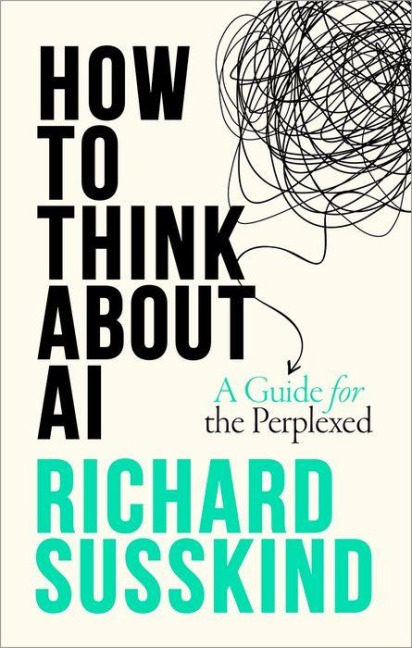
How To Think About AI: A Guide For The Perplexed
-25% su kodu BOOKS
Turime sandėlyje pas mūsų tiekėją
TOP
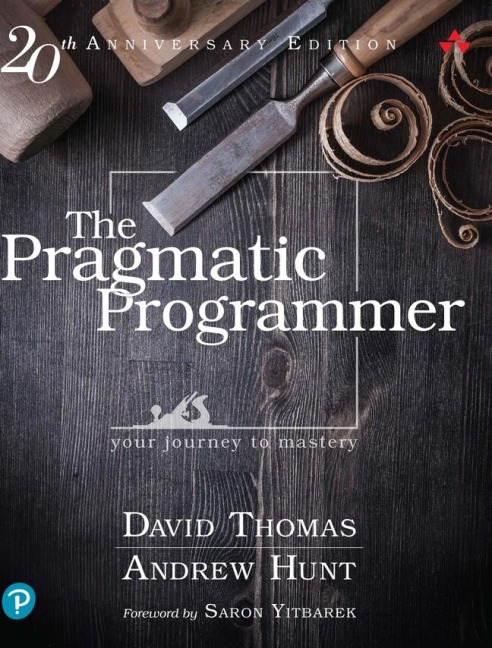
The Pragmatic Programmer: journey to mastery, 20th Anniversary Edition, 2/e: your journey to mastery, 20th Anniversary Edition
-25% su kodu BOOKS
Turime sandėlyje pas mūsų tiekėją
TOP
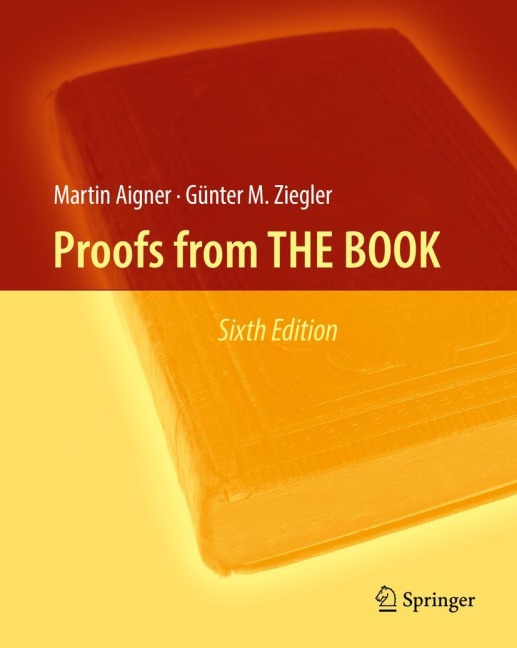
Proofs from THE BOOK
Martin Aigner, Günter M. Ziegler
-25% su kodu BOOKS
Turime sandėlyje pas mūsų tiekėją
TOP
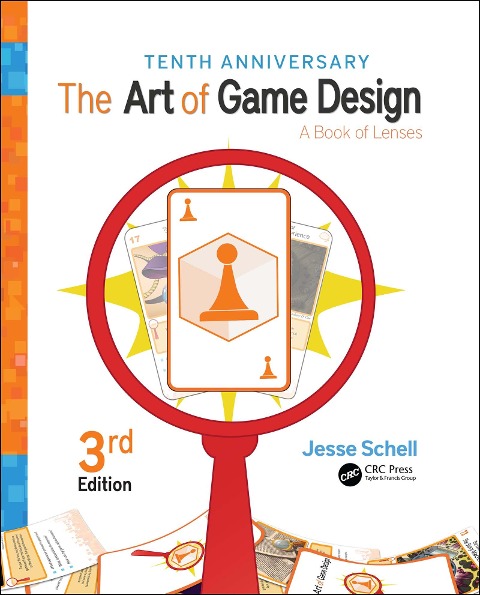
The Art of Game Design: A Book of Lenses
-25% su kodu BOOKS
Turime sandėlyje pas mūsų tiekėją
TOP
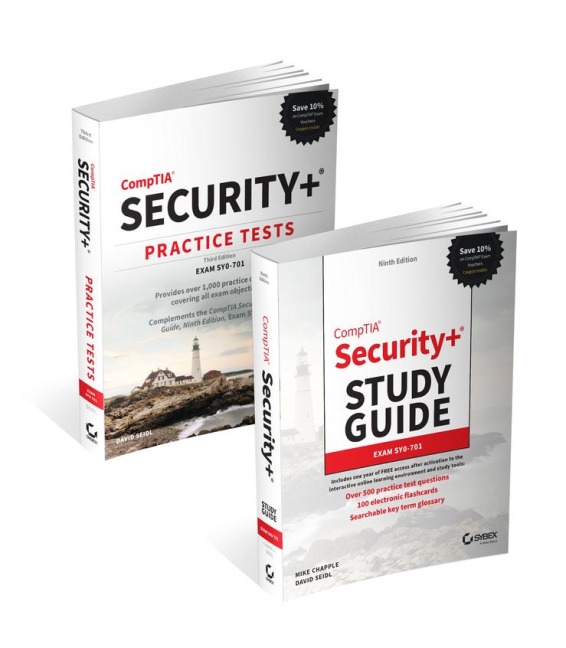
CompTIA Security+ Certification Kit: Exam SY0-701
-25% su kodu BOOKS
Turime sandėlyje pas mūsų tiekėją
TOP
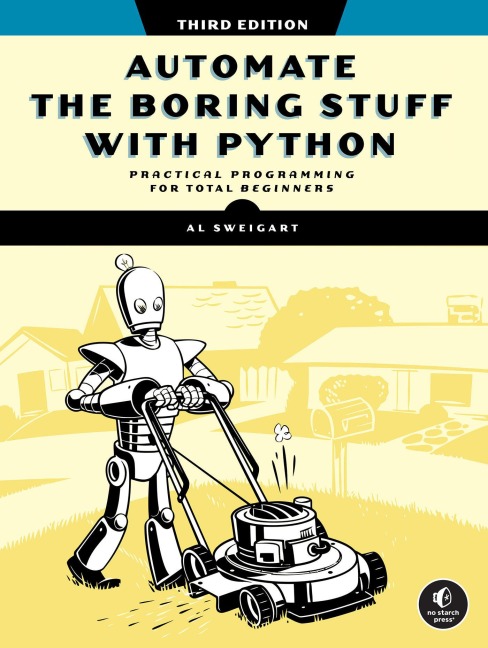
Automate the Boring Stuff with Python
-25% su kodu BOOKS
Turime sandėlyje pas mūsų tiekėją
TOP
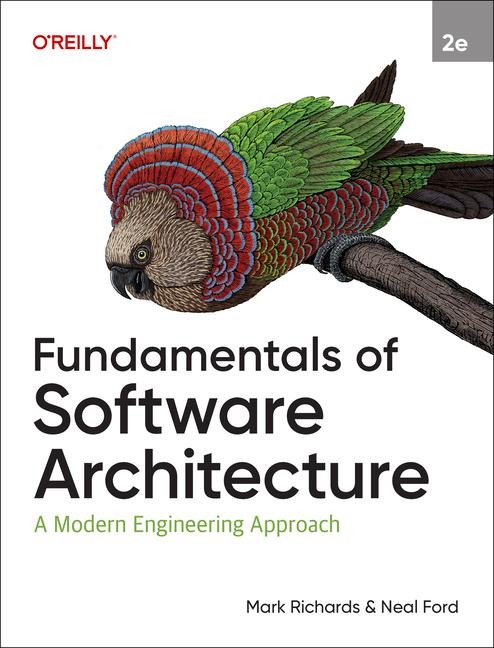
Fundamentals of Software Architecture: A Modern Engineering Approach
-25% su kodu BOOKS
Turime sandėlyje pas mūsų tiekėją
TOP
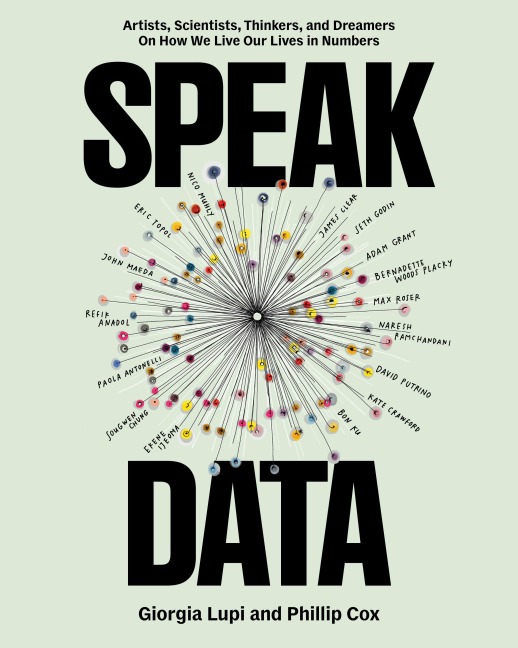
Speak Data: Artists, Scientists, Thinkers, and Dreamers on How We Live Our Lives in Numbers
-25% su kodu BOOKS
Turime sandėlyje pas mūsų tiekėją
TOP

Hacking: The Art of Exploitation
-25% su kodu BOOKS
Turime sandėlyje pas mūsų tiekėją
TOP
Slanted 47 Digital Tools: Slanted Magazine
-25% su kodu BOOKS
Turime sandėlyje pas mūsų tiekėją
TOP
Hackers. 25th Anniversary Edition: Heroes of the Computer Revolution
-25% su kodu BOOKS
Turime sandėlyje pas mūsų tiekėją
TOP

Deep Learning
Ian Goodfellow, Yoshua Bengio, Aaron Courville
-25% su kodu BOOKS
Turime sandėlyje pas mūsų tiekėją
TOP
Mathematics for Machine Learning
Cheng Soon Ong, A. Aldo Faisal, Marc Peter Deisenroth
-25% su kodu BOOKS
Turime sandėlyje pas mūsų tiekėją
TOP
Artificial Intelligence: A Modern Approach, Global Edition
-25% su kodu BOOKS
Turime sandėlyje pas mūsų tiekėją
Aprašymas
This book has two parts :
Part I The Basics
In this part, readers will be able to learn the basic of Python programming. , creating a foundation for general programming languages, which is applicable for programming in any language.
Chapter 1 Introduction : Readers learn to Install Python.Including Python packages, modules. and Code editor (Visual Studio Code).
Chapter 2 Data Types : Readers learn of data types defined in the Python programming language, among others.
Chapter 3 Lists/Dictionaries/Sets/Tuples : Python has lists, dictionaries, sets and tuples, all of which are used to define as much data as desired to be stored in a single variable, making it possible to work with large amounts of data using just a few lines of code.
Chapter 4 Operators : In Python, operators are generally used perform operations on values and variables using for logical and mathematical operations.
Chapter 5 Conditional Statements : Conditional statements allow programmers to specify conditions that use the value of a variable or the result of a comparison to perform a desired statement. Python has a number of interesting techniques for using them.
Chapter 6 Functions : In this chapter, readers learn how to define and call functions, as well as pass and return data.
Chapter 7 Modules : Readers learn how to create their own modules and how to import other modules.
Chapter 8 String Formatting : Readers can use String formatting to format strtings within strings, causing variable values to be passed into the strings.
Chapter 9 Object-oriented programming (OOP) : Python is an object-oriented programming language. Readers will learn to create classes (with method or attributes), objects and relationships between classes (Inheritance, Association, Composition, and Aggregation)
Chapter 10 Try…Exception : Python has a try…exception that reader can use to easily catch errors.
Chapter 11 File Management, with…as and JSON : Reader will learn how to use functions for creating, reading, updating and deleting files, with..as, and to read and write JSON files.
Part II Software Development Projects
In Part II, readers will be introduced to four types of projects developed with Python so that readers can practice and adapt them for their own work. A brief description of the four types of projects is as follows.
Project 1 Game
In this project, readers will use the Pygame package to develop a 2D game that lets players shoot alien ships to explode. Make it in time before the alien ship drops down to the player's place. and must dodge alien bombs as they drop, and readers will be able to use the examples the author created to make changes to the program to make it more understandable at the end of the project. Readers will learn skills that will help you develop your own 2D games in Pygame.
As for Python, there are many game program developers who use it to develop famous games such as Pacman, Snake, Tic-tac-toe, etc., which readers can use to modify it in developing their own games as well.
Project 2 Web Application
In this project, reader will be able to use the Django package to easily develop a Web Application. Python, itself has a database that can be used without having to install any database. In this section, readers will be able to learn how to develop programs that can update, add, edit, and delete data.
Project 3 Data Analysis
In this project, readers will learn how to use beautiful and functional data visualization using matplotlib and pygal in a way that can be used for data analysis which is very useful in research. Various business jobs You can also create map presentations.
Project 4 Artificial Intelligence (AI)
In this project, readers will learn about Artificial Intelligence using matplotlib, scipy, scikit-learn, numpy package and Python development tools. The following Artificial Intelligence tools are available:
Mathematical Tools :
Statistics
• Mean
• Median
• Mode
• Standard Deviation
• Percentiles
Creating data for testing
Data Analysis
• Scatter Plot Analysis
• Linear Regression Analysis
• Polynomial Regression Analysis
• Multiple Regression Analysis
• Categorical Data Analysis
Data Mining
• Decision Tree
• Hierarchical Clustering
• K-Means
• Association Rules
Teaching and Testing Tools.
Daugiau informacijos
| Autorius | Sriphagaarucht Srinhichaarnun (Rachanee Kalayavinai) |
|---|---|
| Leidėjas | VariitSris |
| Išleidimo metai | 2024 |
| Viršelio tipas | Minkšti viršeliai |
| EAN | 9798332304231 |