
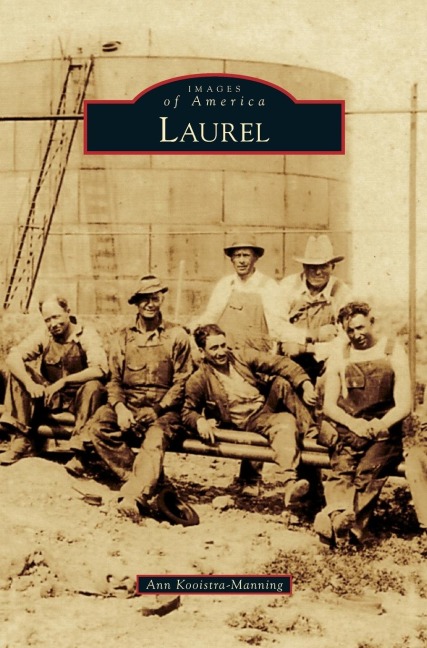
Laurel - Ann Kooistra-Manning
-25% su kodu BOOKS
Pristatymas per 17-23 d.d.
30 dienų grąžinimo politika
Early Laurel, like many Montana frontier towns, was shaped by tenacious settlers who struggled to carve a living from a harsh, often unforgiving landscape in the wake of the Indian Wars. Laurel started as little more than a railway station and a handful of businesses serving railroad workers, farmers, and ranchers in the early 1880s. Irrigation projects soon transformed the dry, dusty prairies along the Yel ... Visas aprašymas
Jums taip pat gali patikti
 TOP
TOP


A Short History of America: From Tea Party to Trump
-25% su kodu BOOKS
Turime sandėlyje pas mūsų tiekėją
TOP

An African History of Africa: From the Dawn of Humanity to Independence
-25% su kodu BOOKS
Turime sandėlyje pas mūsų tiekėją
 TOP
TOP

The Notebook: A History of Thinking on Paper
-25% su kodu BOOKS
Turime sandėlyje pas mūsų tiekėją
TOP

A Little History of the World
-25% su kodu BOOKS
Turime sandėlyje pas mūsų tiekėją
TOP

Man's Search For Meaning: The classic tribute to hope from the Holocaust
-25% su kodu BOOKS
Turime sandėlyje pas mūsų tiekėją
TOP

We the People: A History of the U.S. Constitution
-25% su kodu BOOKS
Turime sandėlyje pas mūsų tiekėją
 TOP
TOP
The Hundred Years' War on Palestine: A History of Settler Colonial Conquest and Resistance
-25% su kodu BOOKS
Turime sandėlyje pas mūsų tiekėją
TOP
Eichmann in Jerusalem: A Report on the Banality of Evil
-25% su kodu BOOKS
Turime sandėlyje pas mūsų tiekėją
TOP

A History of the World in 47 Borders: The Stories Behind the Lines on Our Maps
-25% su kodu BOOKS
Turime sandėlyje pas mūsų tiekėją
TOP

From Third World to First: Singapore and the Asian Economic Boom
-25% su kodu BOOKS
Turime sandėlyje pas mūsų tiekėją
TOP
Bloodlands: Europe Between Hitler and Stalin
-25% su kodu BOOKS
Turime sandėlyje pas mūsų tiekėją
TOP
The Dawn of Everything: A New History of Humanity
-25% su kodu BOOKS
Turime sandėlyje pas mūsų tiekėją
TOP
How the World Made the West: A 4,000-Year History
-25% su kodu BOOKS
Turime sandėlyje pas mūsų tiekėją
TOP

Chip War: The Fight for the World's Most Critical Technology
-25% su kodu BOOKS
Yra sandėlyje
TOP

Man's Search For Meaning: The classic tribute to hope from the Holocaust
-25% su kodu BOOKS
Turime sandėlyje pas mūsų tiekėją
TOP
The Sleepwalkers: How Europe Went to War in 1914
-25% su kodu BOOKS
Turime sandėlyje pas mūsų tiekėją
TOP

A People's History of the United States
-25% su kodu BOOKS
Turime sandėlyje pas mūsų tiekėją
TOP

In Search Of Berlin: The Story of Europe's Most Important City
-25% su kodu BOOKS
Turime sandėlyje pas mūsų tiekėją
Aprašymas
Early Laurel, like many Montana frontier towns, was shaped by tenacious settlers who struggled to carve a living from a harsh, often unforgiving landscape in the wake of the Indian Wars. Laurel started as little more than a railway station and a handful of businesses serving railroad workers, farmers, and ranchers in the early 1880s. Irrigation projects soon transformed the dry, dusty prairies along the Yellowstone River near Laurel into productive farmlands. Homesteaders flocked to the valley. By 1908, Laurel had grown into a bustling shipping and servicing center for three major railroads and boasted the largest rail yard and roundhouse between Seattle and St. Paul. In the 1920s, it became a jumping-off point for tourists destined for Yellowstone Park. A decade later, Laurel staked its claim in the region's emerging oil industry when the Laurel Leaf refinery was built. This small, unassuming town has played a vital role in the development of the Yellowstone River Valley and beyond.
Daugiau informacijos
| Autorius | Ann Kooistra-Manning |
|---|---|
| Leidėjas | Arcadia Publishing Library Editions |
| Išleidimo metai | 2015 |
| Viršelio tipas | Kieti viršeliai |
| EAN | 9781531677503 |