
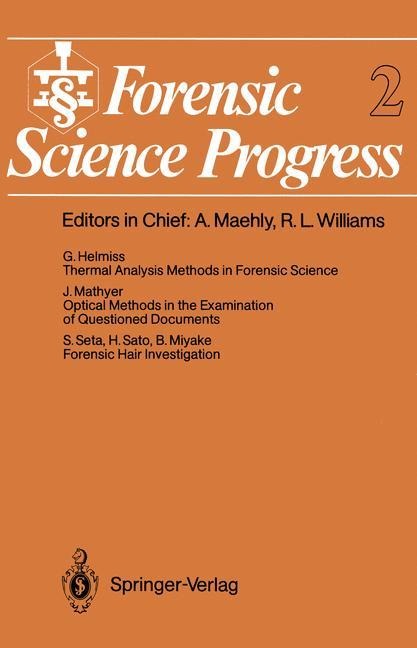
Forensic Science Progress -
-25% su kodu BOOKS
Pristatymas per 12-18 d.d.
30 dienų grąžinimo politika
Thermal analysis methods have been introduced into forensic sciences only in recent times. Though thermoanalytical instruments have been available commercially for some decades it was not until the beginning of the seventies that forensic scientists became interested in them. At that time some state forensic science laboratories in the Federal Republic of Germany made use of differential thermal analysis fo ... Visas aprašymas
Jums taip pat gali patikti
 TOP
TOP

Getting to Yes: Negotiating Agreement Without Giving In
Bruce Patton, William L. Ury, Roger Fisher
-25% su kodu BOOKS
Turime sandėlyje pas mūsų tiekėją
TOP


38 Londres Street: On Impunity, Pinochet in England and a Nazi in Patagonia
-25% su kodu BOOKS
Turime sandėlyje pas mūsų tiekėją
TOP

Not One Inch: America, Russia, and the Making of Post-Cold War Stalemate
-25% su kodu BOOKS
Turime sandėlyje pas mūsų tiekėją
TOP

Blackstone's International Law Documents
-25% su kodu BOOKS
Turime sandėlyje pas mūsų tiekėją
TOP

Just Mercy: A Story of Justice and Redemption
-25% su kodu BOOKS
Turime sandėlyje pas mūsų tiekėją
TOP

How to Measure Anything in Cybersecurity Risk
Douglas W. Hubbard, Richard Seiersen
-25% su kodu BOOKS
Turime sandėlyje pas mūsų tiekėją
TOP

Taxpayers in International Law: International Minimum Standards for the Protection of Taxpayers Rights
Juliane Kokott, Pasquale Pistone
-25% su kodu BOOKS
Turime sandėlyje pas mūsų tiekėją

How to Change Your Mind: The New Science of Psychedelics
-25% su kodu BOOKS
Turime sandėlyje pas mūsų tiekėją

Brussels Effect: How the European Union Rules the World
-25% su kodu BOOKS
Turime sandėlyje pas mūsų tiekėją
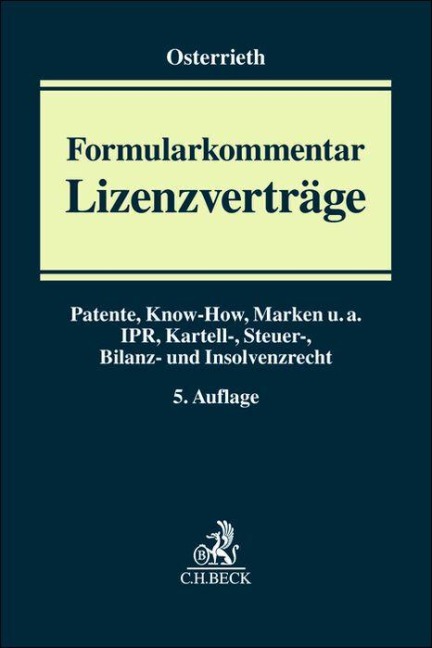
Formularkommentar Lizenzverträge: Patente, Know-How, Marken u.a. IPR, Kartell-, Steuer-, Bilanz- und Insolvenzrecht
-25% su kodu BOOKS
Turime sandėlyje pas mūsų tiekėją

The Yahoo Boys: Real Life with the Love Scammers of Lagos
-25% su kodu BOOKS
Nėra sandėlyje

38 Londres Street: On Impunity, Pinochet in England and a Nazi in Patagonia
-25% su kodu BOOKS
Turime sandėlyje pas mūsų tiekėją

AZADI: Fascism, Fiction & Freedom in the Time of the Virus
-25% su kodu BOOKS
Turime sandėlyje pas mūsų tiekėją

Casebook European Data Law: Ten Years of the GDPR - A Milestone in EU Data Regulation
-25% su kodu BOOKS
Turime sandėlyje pas mūsų tiekėją
Selected Laws of Papua New Guinea: Volume 1
Government Of Papua New Guinea
-25% su kodu BOOKS
Nėra sandėlyje

The Kremlin School of Negotiation
-25% su kodu BOOKS
Turime sandėlyje pas mūsų tiekėją

Citizenship and Residence by Investment: An analysis of EU and International Law in investment migration programmes
-25% su kodu BOOKS
Nėra sandėlyje

Digital Finance in Europe: Law, Regulation, and Governance
-25% su kodu BOOKS
Turime sandėlyje pas mūsų tiekėją

EU-UK Trade and Cooperation Agreement: A Handbook
-25% su kodu BOOKS
Turime sandėlyje pas mūsų tiekėją

Aprašymas
Thermal analysis methods have been introduced into forensic sciences only in recent times. Though thermoanalytical instruments have been available commercially for some decades it was not until the beginning of the seventies that forensic scientists became interested in them. At that time some state forensic science laboratories in the Federal Republic of Germany made use of differential thermal analysis for forensic soil investigations. The forensic science section of the city police of ZUrich, Switzerland, applied an instrument (differential thermal analysis and thermogravimetry) for various purposes. Investigations of fibers by means of differential scanning calorimetry were reported by the Centre of Forensic Sciences at Toronto, Canada, and on the characterization of candle-waxes by differential thermal analysis by the Metropolitan Police Forensic Science Laboratory, London, England. Later on some other insti tutions like the Bundeskriminalamt at Wiesbaden, Germany, or the Home Office Central Research Establishment at Aldermaston, England, purchased instruments for one or more of the following thermal analysis methods: differential thermal analysis or differential scanning calorimetry, thermogravimetry, and thermomechanical analysis. . But even now thermoanalytical instruments are not widespread in forensic science institutes and knowledge of their forensic potential seems to be limited. In the following chapters we will give a survey of the most important thermal analysis methods mentioned above, and on current forensic applications and/or fields of actual research efforts.
Daugiau informacijos
| Leidėjas | Springer Berlin Heidelberg |
|---|---|
| Series | Forensic Science Progress |
| Išleidimo metai | 2011 |
| Viršelio tipas | Minkšti viršeliai |
| EAN | 9783642694059 |