
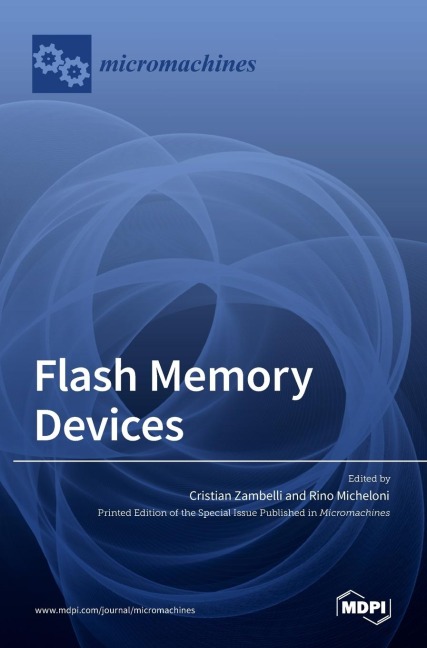
Flash Memory Devices -
-25% su kodu BOOKS
Pristatymas per 10-16 d.d.
30 dienų grąžinimo politika
Flash memory devices have represented a breakthrough in storage since their inception in the mid-1980s, and innovation is still ongoing. The peculiarity of such technology is an inherent flexibility in terms of performance and integration density according to the architecture devised for integration. The NOR Flash technology is still the workhorse of many code storage applications in the embedded world, ran ... Visas aprašymas
Jums taip pat gali patikti
 TOP
TOP

The Art of Electronics
-25% su kodu BOOKS
Turime sandėlyje pas mūsų tiekėją
TOP

The Design of Everyday Things
-25% su kodu BOOKS
Turime sandėlyje pas mūsų tiekėją
TOP
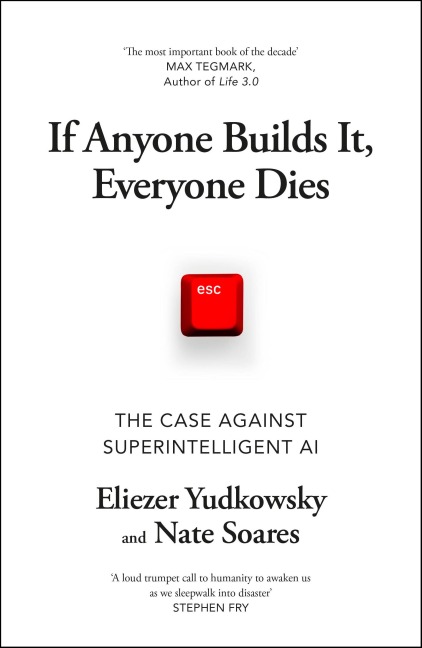
If Anyone Builds It, Everyone Dies: The Case Against Superintelligent AI
Eliezer Yudkowsky, Nate Soares
-25% su kodu BOOKS
Turime sandėlyje pas mūsų tiekėją
TOP


We Are Not Machines: The Fight for the Future of Work
-25% su kodu BOOKS
Turime sandėlyje pas mūsų tiekėją
TOP
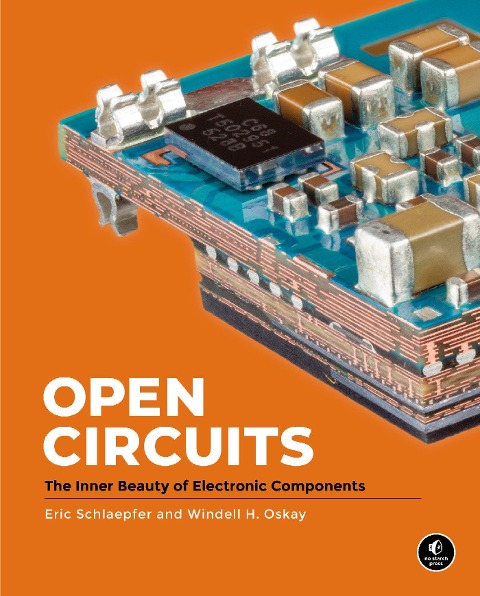
Open Circuits: The Inner Beauty of Electronic Components
Eric Schlaepfer, Windell Oskay
-25% su kodu BOOKS
Turime sandėlyje pas mūsų tiekėją
TOP
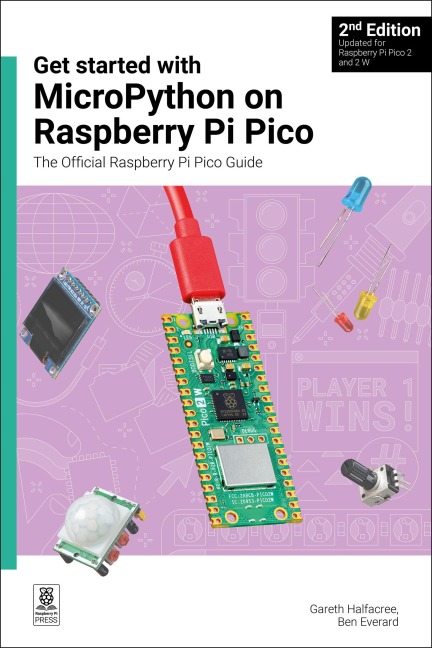
Get started with MicroPython on Raspberry Pi Pico: The Official Raspberry Pi Pico Guide
-25% su kodu BOOKS
Turime sandėlyje pas mūsų tiekėją
TOP
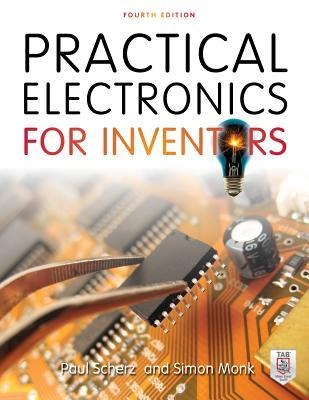
Practical Electronics for Inventors
-25% su kodu BOOKS
Turime sandėlyje pas mūsų tiekėją
TOP

Nucleo Boards Programming with the STM32CubeIDE: Hands-on in more than 50 projects
-25% su kodu BOOKS
Turime sandėlyje pas mūsų tiekėją
TOP

Data-Driven Science and Engineering: Machine Learning, Dynamical Systems, and Control
Steven L. Brunton, J. Nathan Kutz
-25% su kodu BOOKS
Turime sandėlyje pas mūsų tiekėją
TOP

INCOSE Systems Engineering Handbook
-25% su kodu BOOKS
Turime sandėlyje pas mūsų tiekėją
TOP

Fundamentals of Aerodynamics ISE
Christopher Cadou, John D. Anderson
-25% su kodu BOOKS
Turime sandėlyje pas mūsų tiekėją
TOP

Black Holes: The Key to Understanding the Universe
-25% su kodu BOOKS
Turime sandėlyje pas mūsų tiekėją
TOP
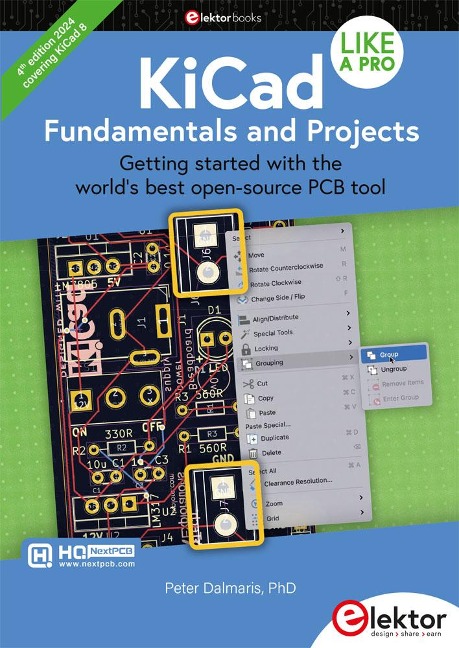
KiCad Like A Pro - Fundamentals and Projects: Getting started with the world's best open-source PCB tool
-25% su kodu BOOKS
Turime sandėlyje pas mūsų tiekėją
TOP

Foundations of Flavor: The Noma Guide to Fermentation: Including Step-By-Step Information on Making and Cooking with: Koji, Kombuchas, Shoyus, Misos, Vinegars, Garums, Lacto-Ferments and black Fruits Vegetables
-25% su kodu BOOKS
Turime sandėlyje pas mūsų tiekėją
TOP
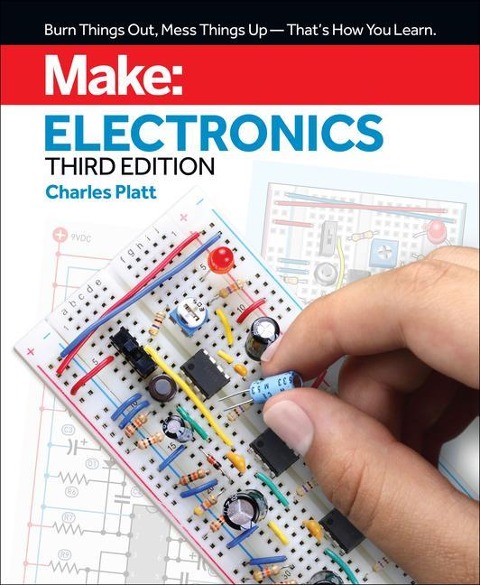
Make: Electronics: Learning by Discovery: A hands-on primer for the new electronics enthusiast
-25% su kodu BOOKS
Turime sandėlyje pas mūsų tiekėją
TOP
The Idea Factory: Bell Labs and the Great Age of American Innovation
-25% su kodu BOOKS
Turime sandėlyje pas mūsų tiekėją
TOP

Flowers For Algernon: A Modern Literary Classic
-25% su kodu BOOKS
Turime sandėlyje pas mūsų tiekėją
TOP
Professional SMD Assembly: Practical Low-Cost Methods for Reliable PCB Production
-25% su kodu BOOKS
Turime sandėlyje pas mūsų tiekėją
TOP

Blood in the Machine: The Origins of the Rebellion Against Big Tech
-25% su kodu BOOKS
Turime sandėlyje pas mūsų tiekėją
TOP

Mastering the Arduino Uno R4: Programming and Projects for the Minima and WiFi
-25% su kodu BOOKS
Turime sandėlyje pas mūsų tiekėją
Aprašymas
Flash memory devices have represented a breakthrough in storage since their inception in the mid-1980s, and innovation is still ongoing. The peculiarity of such technology is an inherent flexibility in terms of performance and integration density according to the architecture devised for integration. The NOR Flash technology is still the workhorse of many code storage applications in the embedded world, ranging from microcontrollers for automotive environment to IoT smart devices. Their usage is also forecasted to be fundamental in emerging AI edge scenario. On the contrary, when massive data storage is required, NAND Flash memories are necessary to have in a system. You can find NAND Flash in USB sticks, cards, but most of all in Solid-State Drives (SSDs). Since SSDs are extremely demanding in terms of storage capacity, they fueled a new wave of innovation, namely the 3D architecture. Today "3D" means that multiple layers of memory cells are manufactured within the same piece of silicon, easily reaching a terabit capacity. So far, Flash architectures have always been based on "floating gate," where the information is stored by injecting electrons in a piece of polysilicon surrounded by oxide. On the contrary, emerging concepts are based on "charge trap" cells. In summary, flash memory devices represent the largest landscape of storage devices, and we expect more advancements in the coming years. This will require a lot of innovation in process technology, materials, circuit design, flash management algorithms, Error Correction Code and, finally, system co-design for new applications such as AI and security enforcement.
Daugiau informacijos
| Leidėjas | MDPI AG |
|---|---|
| Išleidimo metai | 2022 |
| Viršelio tipas | Kieti viršeliai |
| EAN | 9783036530123 |