
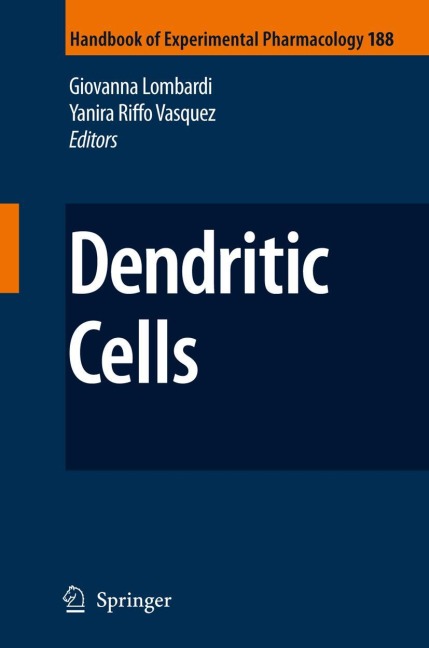
Dendritic Cells -
-35% su kodu BOOKS
Pristatymas per 17-23 d.d.
30 dienų grąžinimo politika
The understanding of the role of dendritic cells (DCs) in immune responses has come a long way since Steinmann and colleagues described these cells in 1972. - tensive research during the intervening period has provided a good understanding of the complexity of the DC system and its pivotal role in immunity. It is also now clearer how different subsets of DCs interact and regulate each other and how DC popul ... Visas aprašymas
Jums taip pat gali patikti
 TOP
TOP

The Myth of Normal: Trauma, Illness, and Healing in a Toxic Culture
-35% su kodu BOOKS
Yra sandėlyje
TOP
The Body Keeps the Score: Brain, Mind, and Body in the Healing of Trauma
-35% su kodu BOOKS
Turime sandėlyje pas mūsų tiekėją
TOP
No Bad Parts: Healing Trauma and Restoring Wholeness with the Internal Family Systems Model
-35% su kodu BOOKS
Turime sandėlyje pas mūsų tiekėją
TOP
Oxford Handbook of Clinical Medicine
Peter Hateley, Iain McGurgan, Ian B. Wilkinson, Tim Raine, Dearbhla Kelly, Kate Wiles
-35% su kodu BOOKS
Turime sandėlyje pas mūsų tiekėją
TOP
Harrison's Principles of Internal Medicine (Vol.1 & Vol.2)
Stephen Hauser, Joseph Loscalzo, Steven Holland, Dan Longo, J. Larry Jameson, Dennis Kasper, Carol Langford, Anthony Fauci
-35% su kodu BOOKS
Turime sandėlyje pas mūsų tiekėją
TOP

The Checklist Manifesto: How to Get Things Right
-35% su kodu BOOKS
Turime sandėlyje pas mūsų tiekėją
TOP

Oxford Handbook of Anaesthesia
-35% su kodu BOOKS
Turime sandėlyje pas mūsų tiekėją
TOP

Maybe You Should Talk to Someone: a therapist, her thearapist, and our lives revealed
-35% su kodu BOOKS
Turime sandėlyje pas mūsų tiekėją
TOP

On Connection: 'Powerful' MATT HAIG
-35% su kodu BOOKS
Turime sandėlyje pas mūsų tiekėją
 TOP
TOP

How Not To Die: Discover the foods scientifically proven to prevent and reverse disease
-35% su kodu BOOKS
Turime sandėlyje pas mūsų tiekėją
TOP
Vademecum Metabolicum: Diagnosis and Treatment of Inborn Errors of Metabolism Forword by William L. Nyhan, San Diego, USA
Johannes Zschocke, Georg F. Hoffmann
-35% su kodu BOOKS
Turime sandėlyje pas mūsų tiekėją
TOP

Cellular and Molecular Immunology
Sarah Henrickson, Abul K. Abbas, Andrew H. Lichtman, Shiv Pillai
-35% su kodu BOOKS
Turime sandėlyje pas mūsų tiekėją
TOP

McGee's Evidence-Based Physical Diagnosis
-35% su kodu BOOKS
Turime sandėlyje pas mūsų tiekėją
TOP
Physics, Pharmacology and Physiology for Anaesthetists: Key Concepts for the FRCA
Matthew E. Cross, Emma V. E. Plunkett
-35% su kodu BOOKS
Turime sandėlyje pas mūsų tiekėją
TOP

Being Mortal: Medicine and What Matters in the End
-35% su kodu BOOKS
Turime sandėlyje pas mūsų tiekėją
TOP
Pocket Guide to Teaching for Clinical Instructors
-35% su kodu BOOKS
Turime sandėlyje pas mūsų tiekėją
TOP
Oxford Handbook of Critical Care
Andrew Webb, Mervyn Singer, Alice Carter
-35% su kodu BOOKS
Turime sandėlyje pas mūsų tiekėją
TOP

The Wills Eye Manual: Print + eBook with Multimedia: Office and Emergency Room Diagnosis and Treatment of Eye Disease
-35% su kodu BOOKS
Turime sandėlyje pas mūsų tiekėją
TOP


Who Deserves Your Love: How to Create Boundaries to Start, Strengthen or End Any Relationship
-35% su kodu BOOKS
Turime sandėlyje pas mūsų tiekėją
Aprašymas
The understanding of the role of dendritic cells (DCs) in immune responses has come a long way since Steinmann and colleagues described these cells in 1972. - tensive research during the intervening period has provided a good understanding of the complexity of the DC system and its pivotal role in immunity. It is also now clearer how different subsets of DCs interact and regulate each other and how DC populations affect the function of other cells of the immune system. The improved understanding of their role in immune response has led to the idea that modulation of DC functions by, for example, pharmacological agents could be used as a pot- tial therapeutic approach in some pathological conditions. The actual applicability and therapeutic potential of all these approaches is yet to be fully demonstrated but nonetheless, animal models of human diseases are proving to be very helpful in the evaluation of manipulated DCs as a new treatment in diseases like cancer, auto- munity or asthma. DCs are integral to the initiation and regulation of immune response (Banchereau et al. 2000). The outcome of antigen presentation by DCs is determined by their maturation status, which can be induced by their interaction with danger signals. To recognise a wide array of pathogen-associated molecular patterns (PAMP), DCs express a number of pattern recognition receptors (PRR) such as Toll-like rec- tors (TLRs) and C-type lectin receptors (CLR) that recognise structural components of pathogens and discriminate between self and non-self molecules.
Daugiau informacijos
| Leidėjas | Springer Berlin Heidelberg |
|---|---|
| Series | Handbook of Experimental Pharmacology |
| Išleidimo metai | 2008 |
| Viršelio tipas | Kieti viršeliai |
| EAN | 9783540710288 |