
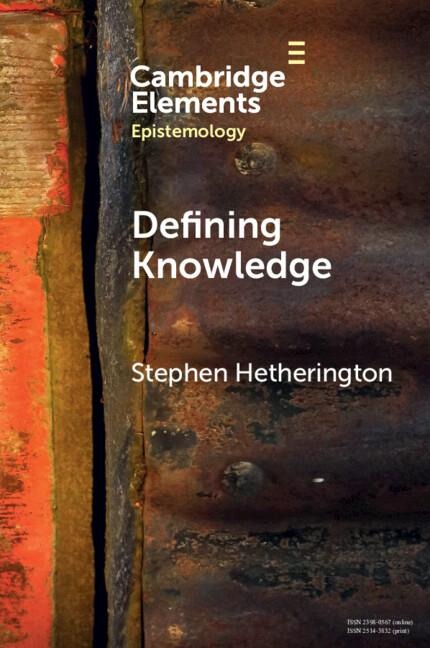
Defining Knowledge - Stephen Hetherington
-25% su kodu BOOKS
Pristatymas per 22-28 d.d.
30 dienų grąžinimo politika
Post-Gettier epistemology is increasingly modalized epistemology ¿ proposing and debating modally explicable conditionals with suitably epistemic content (an approach initially inspired by Robert Nozick's 1981 account of knowledge), as needing to be added to 'true belief' in order to define or understand knowing's nature. This Element asks whether such modalized attempts ¿ construed as responding to what th ... Visas aprašymas
Aprašymas
Post-Gettier epistemology is increasingly modalized epistemology ¿ proposing and debating modally explicable conditionals with suitably epistemic content (an approach initially inspired by Robert Nozick's 1981 account of knowledge), as needing to be added to 'true belief' in order to define or understand knowing's nature. This Element asks whether such modalized attempts ¿ construed as responding to what the author calls Knowing's Further Features question (bequeathed to us by the Meno and the Theaetetus) ¿ can succeed. The answer is that they cannot. Plato's and Aristotle's views on definition reinforce that result. Still, in appreciating this, we might gain insight into knowing's essence. We might find that knowledge is, essentially, nothing more than true belief.
Daugiau informacijos
| Autorius | Stephen Hetherington |
|---|---|
| Leidėjas | Cambridge University Press |
| Išleidimo metai | 2022 |
| Viršelio tipas | Minkšti viršeliai |
| EAN | 9781009095136 |