
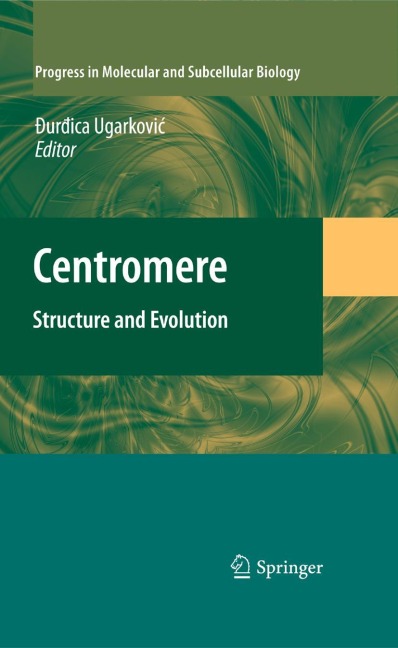
Centromere: Structure and Evolution -
-35% su kodu BOOKS
Pristatymas per 17-23 d.d.
30 dienų grąžinimo politika
The centromere is a chromosomal region that enables the accurate segregation of chromosomes during mitosis and meiosis. It holds sister chromatids together, and through its centromere DNA¿protein complex known as the kinetochore binds spindle microtubules to bring about accurate chromosome movements. Despite this conserved function, centromeres exhibit dramatic difference in structure, size, and complexity. ... Visas aprašymas
Jums taip pat gali patikti
 TOP
TOP

Determined: The Science of Life Without Free Will
-35% su kodu BOOKS
Turime sandėlyje pas mūsų tiekėją
TOP

The Light Eaters: How the Unseen World of Plant Intelligence Offers a New Understanding of Life on Earth
-35% su kodu BOOKS
Turime sandėlyje pas mūsų tiekėją
 TOP
TOP
Why We Sleep: Unlocking the Power of Sleep and Dreams
-35% su kodu BOOKS
Yra sandėlyje
TOP
The Rise and Fall of the Dinosaurs: A New History of a Lost World
-35% su kodu BOOKS
Turime sandėlyje pas mūsų tiekėją
TOP
Biology: A Global Approach, Global Edition
Neil Campbell, Rebecca Orr, Lisa Urry, Peter Minorsky, Michael Cain, Jane Reece, Steven Wasserman
-35% su kodu BOOKS
Turime sandėlyje pas mūsų tiekėją
TOP

Six Not-so-easy Pieces: Einstein's Relativity, Symmetry, and Space-Time
Richard P. Feynman, Robert B. Leighton, Matthew Sands
-35% su kodu BOOKS
Turime sandėlyje pas mūsų tiekėją
TOP
Explaining AuDHD: The expert-led guide to Autism and ADHD Co-concurrence
-35% su kodu BOOKS
Turime sandėlyje pas mūsų tiekėją
TOP


The Age of Alchemy: How Early Innovators Shaped Modern Chemistry
-35% su kodu BOOKS
Turime sandėlyje pas mūsų tiekėją
TOP
The Secrets of our DNA: How Genetics has Changed the World
-35% su kodu BOOKS
Turime sandėlyje pas mūsų tiekėją
TOP

Factfulness: Ten Reasons We're Wrong About the World--and Why Things Are Better Than You Think
Ola Rosling, Anna Rosling Rönnlund, Hans Rosling
-35% su kodu BOOKS
Turime sandėlyje pas mūsų tiekėją
TOP
Why Machines Learn: The Elegant Maths Behind Modern AI
-35% su kodu BOOKS
Turime sandėlyje pas mūsų tiekėją
TOP
Seven Brief Lessons on Physics
-35% su kodu BOOKS
Turime sandėlyje pas mūsų tiekėją
TOP
Entangled Life: How Fungi Make Our Worlds, Change Our Minds and Shape Our Futures
-35% su kodu BOOKS
Turime sandėlyje pas mūsų tiekėją
TOP

Life As No One Knows It: The Physics of Life's Emergence
-35% su kodu BOOKS
Turime sandėlyje pas mūsų tiekėją
TOP
The Rise and Reign of the Mammals: A New History, from the Shadow of the Dinosaurs to Us
-35% su kodu BOOKS
Turime sandėlyje pas mūsų tiekėją
TOP
Learn Faster, Perform Better: A Musician's Guide to the Neuroscience of Practicing
-35% su kodu BOOKS
Turime sandėlyje pas mūsų tiekėją
TOP

Janeway's Immunobiology
Leslie J. Berg, Kenneth Murphy, Casey Weaver
-35% su kodu BOOKS
Turime sandėlyje pas mūsų tiekėją
TOP

The Road to Reality: A Complete Guide to the Laws of the Universe
-35% su kodu BOOKS
Turime sandėlyje pas mūsų tiekėją
TOP
The Brain That Changes Itself: Stories of Personal Triumph from the Frontiers of Brain Science
-35% su kodu BOOKS
Turime sandėlyje pas mūsų tiekėją
Aprašymas
The centromere is a chromosomal region that enables the accurate segregation of chromosomes during mitosis and meiosis. It holds sister chromatids together, and through its centromere DNA¿protein complex known as the kinetochore binds spindle microtubules to bring about accurate chromosome movements. Despite this conserved function, centromeres exhibit dramatic difference in structure, size, and complexity. Extensive studies on centromeric DNA revealed its rapid evolution resulting often in significant difference even among closely related species. Such a plasticity of centromeric DNA could be explained by epigenetic c- trol of centromere function, which does not depend absolutely on primary DNA sequence. According to epigenetic centromere concept, which is thoroughly d- cussed by Tanya Panchenko and Ben Black in Chap. 1 of this book, centromere activation or inactivation might be caused by modifications of chromatin. Such acquired chromatin epigenetic modifications are then inherited from one cell di- sion to the next. Concerning centromere-specific chromatin modification, it is now evident that all centromeres contain a centromere specific histone H3 variant, CenH3, which replaces histone H3 in centromeric nucleosomes and provides a structural basis that epigenetically defines centromere and differentiates it from the surrounding chromatin. Recent insights into the CenH3 presented in this chapter add important mechanistic understanding of how centromere identity is initially established and subsequently maintained in every cell cycle.
Daugiau informacijos
| Leidėjas | Springer Berlin Heidelberg |
|---|---|
| Series | Progress in Molecular and Subcellular Biology |
| Išleidimo metai | 2009 |
| Viršelio tipas | Kieti viršeliai |
| EAN | 9783642001819 |